

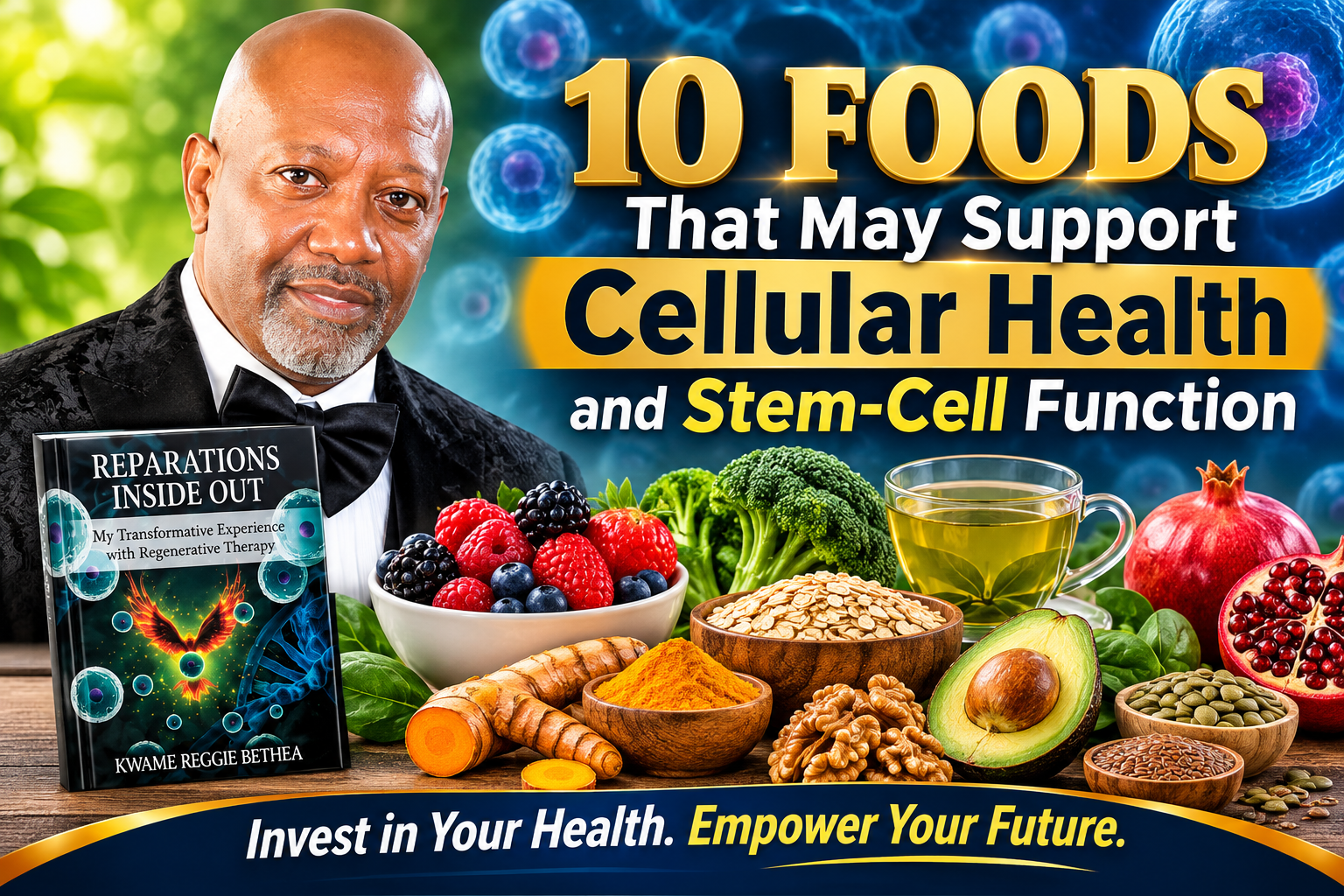
Invest in Your Health. Empower Your Future.
What if some of the most meaningful steps toward better health started with the foods you put on your plate?
Our bodies are constantly working to repair, renew, and maintain themselves. From supporting cellular function to maintaining healthy inflammatory responses, nutrition plays an important role in creating an environment where the body can function at its best.
While no single food can reverse disease or guarantee cellular regeneration, choosing nutrient-dense foods can help provide the vitamins, minerals, antioxidants, and healthy fats our bodies need.
In his book, Reparations Inside Out: My Transformative Experience with Regenerative Therapy, author, speaker, and wellness advocate Kwame Reggie Bethea explores the importance of taking a more active role in personal well-being. His message encourages readers to look beyond quick fixes and consider how nutrition, self-love, and lifestyle choices can contribute to a healthier future.
Let’s explore 10 foods that may help support cellular health and overall wellness.
1. Berries: Nature’s Antioxidant Powerhouses
Blueberries, raspberries, strawberries, and blackberries are packed with antioxidants and polyphenols.
These compounds help protect cells from oxidative stress, which occurs when there is an imbalance between free radicals and the body’s antioxidant defenses.
Key nutrients: Anthocyanins and Vitamin C.
Why include them: Add berries to smoothies, oatmeal, yogurt, or enjoy them as a nutritious snack.
2. Broccoli Sprouts: Small but Nutritionally Powerful
Broccoli sprouts contain sulforaphane, a naturally occurring plant compound studied for its potential role in supporting the body’s cellular defense and detoxification pathways.
Despite their small size, these sprouts offer an impressive nutritional profile.
Key compound: Sulforaphane.
Why include them: Add fresh broccoli sprouts to salads, sandwiches, and wraps.
3. Turmeric: A Golden Addition to Your Diet
Turmeric contains curcumin, a natural compound that has been widely studied for its antioxidant and anti-inflammatory properties.
Maintaining a healthy inflammatory response is important for overall wellness and normal cellular function.
Key compound: Curcumin.
Why include it: Use turmeric in soups, curries, teas, and smoothies. Pairing it with black pepper may help improve curcumin absorption.
4. Walnuts: Healthy Fats for Cellular Support
Walnuts are a nutritious source of plant-based omega-3 fatty acids, particularly alpha-linolenic acid (ALA).
Healthy fats are important components of cell membranes and contribute to normal cellular function.
Key nutrient: Omega-3 ALA.
Why include them: Enjoy a handful of walnuts as a snack or add them to oatmeal, salads, and smoothies.
5. Leafy Greens: Essential Nutrition for Everyday Health
Spinach, kale, collard greens, and other leafy vegetables provide essential nutrients that support many functions throughout the body.
They contain folate, carotenoids, magnesium, and Vitamin K.
Key nutrients: Folate, Vitamin K, and magnesium.
Why include them: Incorporate leafy greens into salads, smoothies, soups, and everyday meals.
6. Steel-Cut Oats: Fuel for a Healthy Body
Steel-cut oats are rich in fiber, particularly beta-glucan, a soluble fiber associated with supporting healthy cholesterol levels and metabolic health.
They also provide minerals and steady-release carbohydrates that can help support sustained energy.
Key nutrient: Beta-glucan fiber.
Why include them: Start your morning with steel-cut oats topped with berries, nuts, or seeds.
7. Avocados: Nourishment Through Healthy Fats
Avocados provide monounsaturated fats, fiber, and Vitamin E.
Vitamin E acts as an antioxidant, helping protect cells from oxidative damage. Healthy fats also contribute to normal cell membrane structure and function.
Key nutrients: Healthy fats and Vitamin E.
Why include them: Add avocado to salads, sandwiches, smoothies, or whole-grain toast.
8. Green Tea: A Source of Protective Plant Compounds
Green tea contains catechins, including epigallocatechin gallate (EGCG), which have been studied for their antioxidant properties.
These plant compounds may help support the body’s natural defenses against oxidative stress.
Key compound: EGCG.
Why include it: Enjoy a cup of unsweetened green tea as part of your daily wellness routine.
9. Pomegranate: A Fruit Rich in Polyphenols
Pomegranates contain polyphenols and other antioxidant compounds that have been studied for their potential cardiovascular and cellular health benefits.
They are also a source of fiber and Vitamin C.
Key compounds: Polyphenols.
Why include them: Add fresh pomegranate seeds to salads, yogurt, oatmeal, or enjoy them on their own.
10. Flaxseeds and Pumpkin Seeds: Small Foods with Big Benefits
Seeds are nutritional powerhouses that provide fiber, healthy fats, minerals, and plant-based compounds.
Flaxseeds contain omega-3 ALA and lignans, while pumpkin seeds provide zinc, magnesium, and other essential nutrients.
These nutrients contribute to normal immune function, cellular processes, and overall health.
Key nutrients: Zinc, omega-3 ALA, and lignans.
Why include them: Sprinkle ground flaxseeds and pumpkin seeds over oatmeal, salads, smoothies, or yogurt.
Nutrition Is One Way We Can Support the Body’s Natural Repair Systems
Healthy eating is an important part of taking care of yourself, but true wellness involves more than nutrition alone.
A well-rounded approach to personal health also includes:
Movement: Stay physically active and incorporate exercise that works for your body.
Rest: Prioritize quality sleep and give your body time to recover.
Hydration: Drink enough water to support normal bodily functions.
Stress management: Make time for relaxation, mindfulness, and emotional well-being.
Quality medical care: Work with qualified healthcare professionals to understand and address your individual health needs.
Small, consistent lifestyle choices can contribute to meaningful improvements in overall well-being.
Your Health Is Your Power. Your Knowledge Is Your Freedom.
In Reparations Inside Out: My Transformative Experience with Regenerative Therapy, Kwame Reggie Bethea shares a personal journey of seeking better health after experiencing high-impact chronic pain.
What began as a search for answers through nutrition, self-love, and the body’s repair processes developed into a deeper mission: encouraging individuals to become more active participants in their own well-being.
The book invites readers to consider an important question:
How do we repair ourselves and strengthen our communities from the inside out?
Taking ownership of your health begins with education, awareness, and intentional daily decisions. It is about understanding your body, exploring healthier habits, and recognizing the importance of caring for yourself.
You don’t have to change everything overnight. Sometimes, meaningful progress starts with one healthier meal, one better habit, or one decision to learn more about your body.
Take the First Step Toward a Healthier Future
Your wellness journey is personal, and every positive step matters.
Explore the power of nutrition, discover the importance of self-care, and become more intentional about the choices that influence your health.
Learn more from Kwame Reggie Bethea’s book, Reparations Inside Out: My Transformative Experience with Regenerative Therapy.
Invest in your health. Empower your future. Become an active participant in your own well-being.
Get your copy today!
Available on Amazon and directly from the author.
Visit: www.kwamereggie.com
Email: info@kwamereggie.com
Phone: 609-665-9302
Disclaimer: This article is intended for educational and informational purposes only. The foods discussed may support general health as part of a balanced diet, but they are not proven treatments for disease or substitutes for medical care. Individual nutritional needs vary. Always consult a qualified healthcare professional before making significant dietary or treatment changes.